Tuesday, March 16, 2010

Character Journal 1 - H. Tiberius Holocene


The guy playing the actual rogue trader in our game is the one who turned me onto the game in the first place. Needless to say, he's enthusiastic about it.

Indeed, he went so far as to write up a character journal entry for his rogue trader, so I'm posting it here on the blog. In my opinion, this is one of the greatest testaments of gamer excitement there is. Plus, it's really going above and beyond the call of duty as a player. To honor it, here's the entry. Matt, if you're reading this, treat yourself to 500 extra xp.

Warrant of Trade # RV-426-G7-96-BFN4Y2
Granted to Rogue Trader Hester Nathaniel Holocene 623M35
Given leave to spread the light of the God Emperor to places unknown within Segmentum Obscurus.

Port Wander was different from how I remember it. I had been there a number of times with my uncle, often picking up aretefacts and stories from Rogue Traders that had traversed the Kronus Expanse. I believe the difference is in the leaving. Every other time we departed, we returned to points within the Calixis Sector. This time, however, we headed out ourselves. I never really viewed Port Wander as the edge of the Imperium, but I suppose that's exactly what it is. While there are other Rogue Traders out here in my sky, we are officially beyond the bounds of the Grand Imperium of Humanity.

The stop at the port did prove useful however. We managed to repair a damaged docking bay. I still need to stock the bay with lighters and hire on more crew to man the bay. We did manage to find a surgeon of some credibility. I believe she will serve the ship well, especially considering her dealings with xenos in the past. I'm hoping that her expertise will come in handy on any unsavory planets we encounter.

I must admit that the archaeotech room in the middle of the ship is rather disconcerting. I am certainly interested in learning as much as I can from the hologram of my uncle, and hopefully learning more about the ship and her capabilities as well. But knowing that the Machine Spirits can be so... forceful is something that I am going to have to deal with. I do not like the idea of control of my vessel being wrested from me, even if the ship is 5000 years old.

I am curious as to why there is an Imperial ship at Footfall, and why two other Rogue Trader houses, entire fleets even, are also in orbit. There is some sort of festival going on on Footfall, and I'd like to find out what that is. I also need to look into procuring supplies and any information for a colonization project in the Foundling Worlds.

On the other hand, I am honestly happy that we have made it through the Maw relatively unscathed. I had no doubt that our crew and the Ferral Wolf would make it through of course, but there is something about being on this side of the Maw... I think it is the freedom. While out here, strength and cunning account more than laws. In the Expanse I can finally stretch my legs, and carve my name upon the stars. How can that not evoke some emotion and spur me on into the unknown?

Sunday, March 14, 2010

Terrain - Gettin' a Little Crazy

So, I covered some of the bits and pieces I used for sci-fi gaming and certainly Rogue Trader. However, for this game, I decided to take the plunge. I got really serious and crazy...and bought the Imperial City terrain set put out by Games Workshop. So far, I'm very pleased with my purchase. It is very pricey in that this boxed set of terrain costs $90, but if you factor in that the set can build about 4 buildings; then each building weighs in at about $25, which is a fair price for me. If you're at all curious about these buildings, you can buy them separately for about $25 a pop.
The first building I started out with was the Basilica, which is by far the most complex of the buildings. The pieces were on top when I opened the box, so what are you going to do?
Each of the buildings are made up of square tiles like the ones featured here.
As you can see from the picture above, after you pop the tiles out of their plastic skeleton sheets, you'll need to use an exacto knife to smooth out the tiles. But it doesn't take long. Once the tiles are prepped and ready, they are easy to glue together. Just put the tiles together and stick 'em with your favorite glue. The titles are modular, so you can follow the designs featured in the box or you can literally make up your own buildings and towers according to your taste. If you pursue the latter, however, I recommend drawing up a plan of your building first. When you are putting the pieces together, it's easy to lose track of what you were going to put where.
One massive help to me was the use of accelerator, which I has never used before. It's featured here on the far right.
Guys, I can't tell you how much a difference accelerator has made for me. It has completely transformed how I put miniatures together. It's literally been an night-and-day difference for me. Here's an example -
These overhangs, which are glued to the wall of the basilica would have been a real headache for me normally. Glue, hold in place, hold in place, wait, hold in place. With the accelerator, I could literally glue, place, spray, and walk away. Totally awesome.
After applying my hobby super-glue, I just sprayed each piece one time with the accelerator, and the glue hardened instantly. It made making the terrain pieces happen much faster. I was able to finish the basilica in the span of about 2 days, only casually working, where normally it might be something that I work on all week.
Here's a look at the basilica, just before I added all the fun bits on it. The final constructed basilica I'll post later.

Friday, March 12, 2010

Terrain for My Games

I enjoy a bit of modeling and mini work from time to time. While in college, I took up miniature painting as part of my obsession with D&D. However, I never got close to scale of work that was involved in wargaming.

Until, of course, I met my friends at the Minions of the Monster Master. You can also check out more mini modeling at Mik's blog. These guys really turned me onto miniatures and modeling in a big way. Since then, I've tried to incorporate minis and modeling in most of my games.

When I ran my Iron Kingdoms game, because I had played a lot of Warmachine, I had a lot of models of the very things the PCs were fighting in the game. It was nice to be able to pull out a carnivean when they fought one and I even painted up a Karchev for them to fight in the final session. And I had the satisfaction of the "moral victory" of putting the right figures in front of the players most nights. "Hey! You're fighting a helljack! It looks...exactly like that!"

Here are a few things that I did for terrain in Dark Heresy. Later, I'll go into the big terrain pieces that I'm putting together for Rogue Trader.

First up, I highly recommend a generic playing surface. These pieces of cobblestone courtyard have worked for me on a number of occasions. Cobblestone is not entirely out of character for 40k. I really wanted to create a more tech-y battlefield surface, but unfortunately my attempts to make one ended up as a disaster. Anyhow, for me, the generic playing surface is used instead of a battlemat. This particular one was bought at Michaels. We don't use squares to measure out distances, we use the good old-fashioned measuring tape.


Here are two other pieces that have come in handy for me. The first is the Star Wars Galaxy Tile set. These pieces are very tech and very sci-fi. The only problem is that you're never going to represent a very large space with these pieces. If I had a do-over, I would have bought two of these sets.


Finally, here's a Dwarven Forge sci-fi set. This particular set is their Sci-Fi Alpha Expansion Set. I love this set because it's very modular. The grey floor pieces can be a dias or just placed on a battlefield to suggest the setting. The columns can be pieces of machinery, computer banks, etc. The same with the stairs. Another useful tip - the columns can hold pieces of Dungeon Tiles on them to suggest catwalks and walkways. The only problem with the Dwarven Forge set, of course, is that it's rather expensive. The Sci-Fi Alpha Expansion alone costs 49 dollars, not including shipping and handling.


That's all for now. Next time, I'll show off the really cool pieces of terrain I'm working on.

Monday, March 8, 2010

Narrative Combat


For the opening sequence of the campaign, as I stated before, I wanted to start off the game In Media Res. I had this idea of starting everything off with a grand space battle. Plenty of space operas start off this way. Star Wars. The recent Star Trek movie. Even Mass Effect 2.

The problem with doing this, however, is that I've learned that if you throw the PCs into a very intense, climatic situation with lots of action, lots of new rules, and lots of decisions to be made, it tends to be overwhelming.

So what I did instead of using the space combat rules was to create a series of decision trees for each of the ship's stations. These decision trees would determine what exactly happened in the flashback scene.

For example, for the Void Master specifically, his decision tree looked like this:

As you pilot the ship in this grand combat, what is your general approach?
  1. Fly aggressively, bearing down on enemy vessels.
  2. Fly evasively, making sure your ship doesn't get hit.
  3. Attempt to outflank your opponents, finding weak spots in their defenses.
After the PC made his choice, I then had him make a piloting check. For each choice, there were different results for success and failure.

Aggressive Flying
Success: One of the ork ships is destroyed, but the ship gets damaged
Failure: An ork ship is heavily damaged or even rendered useless - but the PCs ship will get heavily damaged as well.

Evasive Flying
Success: Indicates that an entire squadron of ork fighter craft are destroyed but the ship is damaged
Failure: The fighter craft are still destroyed but at the cost of the ship getting heavily damaged

Outflanking Maneuver
Success: Ship avoids damage and engagements entirely.
Failure: The ship draws a number of other enemy vessels towards it.

In this way, the players' choices had a real and concrete impact on the story. If the Void Master chooses Evasive flying, then there is a whole sequence with ork fighters. If the Void Master goes for Aggressive flying, then the scene becomes more about ships trading broadsides.

One more important thing that made this scene a success - I had all of the players make their rolls ahead of time. Before the scene even began, I simply told them that they were going to be in a giant space battle and then I presented their choices before them. Thereafter, they knew ahead of time whether they were going to be successful or not.

This allowed the players to craft their own narrative in the scene. For example, the Void Master in question actually failed his roll, but I allowed him to narrate his own failure and to direct the scene, since there was an agreement ahead of time as to what the result would be.

All in all, it was an experiment that I will definitely use again. I ripped off the idea from 4th Edition's Skill Challenges, which were refined and explained a bit more in the recent Galaxy of Intrigue book for Star Wars SAGA.

Sunday, March 7, 2010

Second Session - First Evening of Play


Well, the second session - the one where we actually got to play - went off very well. The group gathered, made some last minute adjustments to characters and we began.

One thing that I had a hard time wrapping my head around was starting a game where all of the characters were supposed to really know each other when the players would be trying out their characters for the first time.

So, what I did was to start the entire game off with a flashback sequence. We flashed back to a time in which the previous rogue trader was in charge of their ship. In this introductory sequence, I pulled a little from 7th Sea and set it In Media Res. The campaign started off with the Explorer's ship being caught up in a massive space battle and their ship was poised to make the last few critical moves which would make all of the difference.

This, I hope, gave the players some context for their ship, their crew, and where they came from. During the interactive flashback, I allowed the players to get a small glimpse at the former command structure of the ship. I didn't want to start off the campaign by throwing a bunch of new rules at the players, so I didn't use the space combat section of the book. Instead, I made the entire sequence more narrative, and yet still interactive. It was just a flashback after all. I'll discuss how I did that more later.

Then, we flashed forwards to the "present" day, one year after the flashback. The Explorers stopped by Port Wander on their way into the Koronus Expanse. There, they repaired an ancient docking bay that hadn't been used in quite some time and gave their ship more Space Points. Also, they recruited a brand new member of their team. Instead of letting them talk to and choose from a group of NPCs I made up, I allowed the players to make up their candidate whole cloth. It worked out brilliantly. The players, as a group, decided upon the birthplace, upbringing, and background of one of the ship's major NPCs.

There was a bit of drama as the ship's Seneschal PC got an opportunity to unlock some hidden memories he had lost from his traumatic past. He recovered, and the ship was on its way.

As the coordinates for the Maw were entered, the Explorers had an encounter with a virtual intelligence hologram of the former rogue trader - Lucant Holocene. Already the interaction with the Holocene virtual intelligence has raised a fair number of mysteries and questions. It even prompted the players to make their first Endevour Card.


Now that I've used one in action, I'm really glad I made the cards now. I could have jotted down their Endevour in my notebook, but that can easily get overlooked from week to week. If I had typed it up and put on my laptop, I'm still likely to never look at those notes. However, having the objectives on an attractive card makes me handle and look at them more. And they are tucked into a pocket at the front of my notebook, so they are always the first thing I see when I open my notes.

Friday, March 5, 2010

The Entourage of the Ferral Wolf

So here are the NPCs aboard the Explorers' ship, the Ferral Wolf. Each one represents different personnel aboard the ship, as I stated in my last post. You'll note that if some of these characters die, it doesn't mean that the Explorers' lose everyone that they are associated with, but it does mean that that portion of the crew are severely hindered.

The last NPC is kind of interesting. In our first game session, I told them that they were going to Port Wander to interview for a new position on their ship. Thereafter, I told that players that they were allowed to make up, whole cloth, who they were recruiting. I got the idea from the Dungeon Master's Guide 2 - a neat technique of basically allowing the players to determine who some of the characters are in the story. Even major ones! Essentially, I allowed the players, as a group, to basically create one of the major NPCs of the campaign. That ended up being Dr. Evana Kintobar.

The origin path chart was very helpful, because they were able to whip Dr. Kintobar's history and background quickly, just by referring to the path chard and discussing it.

Benedict Chaucer – First Mate
Background: Born on a hive world to a mid-hive gang, Benedict was always surrounded by numerous mothers and fathers. Through her cunning and determination, she became a stub-jacker and gang leader. When a rival gang threatened her whole territory, she took out that rival gang as well as the head of the noble house who was sponsoring it. She fled into the void, avoiding the noble house and the arbites. She was hired on by the arch-militant’s mercenary company. Benedict is known to be charismatic and a sort of team mascot for the ship's crew.
Personality: Spunky; chipper; sly.
Represents: General crew populace. If Benedict dies, the crew takes either a large hit in the population or morale rating.


Occulus Dert – Master Enginseer
Background: Dert was born long ago on a forge world as a foreman and tech-priest. However, internal strife amongst the tech-priests caused him and his brothers to take up arms. His body became heavily modified for war. His success as a guardsman and later captain of the guard allowed him to become promoted onto a starship. Eventually, however, his ship fell to chaos pirates. Later, he joined the Ferral Wolf as an enginseer, wanting to try his hand at something other than fighting for a change. Eventually, he worked his way to the top, becoming master of the ship's engines. Occulus has most of his emotional functions removed, except those that trigger humor. As a result, Occulus is almost always in a jocular, even in the most inappropriate of times.
Personality: Jovial; eager; and curious.
Represents: General crew of main engineering. Should Dert perish, most of the crew of engineering die as well.


Brother Vist – Master Scout
Background: Brother Vhist was actually born in an tech temple and trained from the time he was very little to be an assassin. He traveled the galaxy performing assassinations of opponents to the Adeptus Mechanicus. However, his chapter house fell under the influence of chaos. His family, friends, and associates were condemned as blasphemers and executed. After that, Brother Vhist wandered the segmentum he was in looking for work until he ventured upon the Explorator.
Personality: Quiet; sinister; and obedient.
Represents: All planetary scouts. Should Brother Vhist die, so do all planetary scouts.


Lieutenant Haddon Ghent
Background: Lieutenant Ghent is an Imperial Navy man through and through. His entire ship was lost in the ork attack on Canis. He joined up with the rogue trader fleet at that time, the only survivor of his ship’s destruction. Always meant to get back to the navy, but never ended up doing so. Now considered AWOL.
Personality: Upright; bigoted; confident
Represents: The marines aboard the ship. If Ghent perishes, the marines of the Ferral Wolf are not entirely killed, but suffer heavy losses.


Sitara b’n H’dreed – Astropath Transcendent
Background: Sitara was born a psyker and was taken at a young age to Holy Terra, where she basked in the light of the Emperor. There, she received a moving experience, one that has left her with a quiet sadness, for in her heart she knows that she will never see such brilliance or glory again. At the same time, she fears no death or danger, for she longs to see the Emperor’s light one last time. From her school she was purchased by the Holocene line and actually served for a long time as a communicator for the planetside noble house. Upon the destruction of the planet, she escaped with the Arch-Militants serving with them before becoming the Astropath Transcendent for the rogue trader dynasty.
Personality: Ethereal; calm; wise
Represents: If Sitara perishes, there are only a few low-level astropaths left on the ship, and certainly not enough to send a message out of system.


Malelificant – Navigator
Background: Malelificant is the longest serving member aboard the Ferral Wolf’s crew. A member of one of the Great Nomadic Houses of Calixis, Maleificant was assigned to the Holocene Dynasty at an early age. He served on a number of vessels, but has served about the Ferral Wolf for over a century. Malelificant claims to know the Wolf “better than anyone else, better than any of her current or former Enginseers”. Whether this is true or not, Malelificant is known to talk to the ship on a regular basis. In his old age, he is retreated mostly into the ship, rarely leaving it, and usually content with being waited upon by servitors rather than people.
Personality: Surly; nostalgic; loyal
Represents: Malelificant is the ship's one and only navigator. Losing him would be disastrous in and of itself.


Doctor Evana Kintobar – Ship’s Surgeon
Background: Born on Scintilla, Evana was brought up in the Collegium Medicus Rector. From the age of seven, she was taught the ways of medicine, the body, and how to treat its many functions. Eventually, she went on to serve the Noble House Strophes as one of their leading physicians. However, her noble house fell victim to a vicious attack from a powerful criminal organization. Without a reliable patron, Dr. Kintobar traveled into space, looking for employment and adventure. She has seen much of the sector and even the segmentum, and has dealt with a number of xenos species.
Personality: Assertive; verbose; matriarchal
Represents: The ship's medical staff. Should Dr. Kintobar perish, very few medicae technicians are left on board.

Tuesday, March 2, 2010

The Micro / Macro Divide


Speaking of trying to express the scope of Rogue Trader - one of the techniques I'll definitely be using in the game is what I call the Microcosm / Macrocosm divide.

I first studied this is college. The idea is that often in fiction or media, there will be a single conflict which is supposed to symbolize a greater struggle going on in the background. This isn't too hard to understand. We all understand that at the end of Return of the Jedi, the real struggle that is going on is in the throne room of the Death Star. And if Luke loses his battle with the Dark Side, then everyone else on his side also loses.


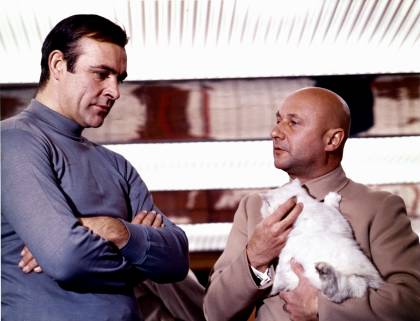
We see this in a lot of Bond flicks. James Bond goes in, confronts the bad guy in the end, while a raging battle of MI-6 agents and minions takes place behind them. When Bond sweeps in and does this, the audience immediately understands that this final conflict is what really matters. The big battle scene is just a backdrop. Heck, we even see this in Shakespeare. The big battles in the plays Richard III and in Macbeth are determined by a small conflict on the field with just a few players.

I suppose for roleplaying, we could have conflicts that are more "realistic", where the main characters are only a small part of the battle. However - how much fun would that be?

I've used this idea to great success in a lot of my other campaigns. Back in the day, I ran a sci-fi military game for my friends at Minions of the Monster Master. The main characters were members of an elite fighting division called Alpha Wolf Pack. Anyhow, I always explained to my players that in large scale battles, their success or failure would determine the fate of the entire army. No pressure.

So, for example, I might stage a battle with the player characters and an elite squad of opponents. Even though the PCs will never fight the rest of the combatants on the battlefield, the conflict with the elite squad basically determines the outcome of the entire conflict.

I had been using this idea of the macrocosm / microcosm for a while. However, down in Minion Land, I really refined that idea. I created NPCs in the party's retinue who essentially represented portions of their entire platoon or division. For example, I might have a sniper NPC who represents all of the scouts in the party's division. Or I might have a tank commander who represents all of the tanks that are supporting the party's division. I explained carefully to the players at the outset that if something happened to one of those NPCs, their division would symbolically share the same fate. So, if you lose the sniper in a battle, all of your scouts also die in the battle. If you lose your tank commander, you also lose all of your tanks. This was very effective, particularly once the PCs became fairly powerful and difficult to harm. Suddenly, the game wasn't just about keeping yourself alive. It became about bringing your boys home.